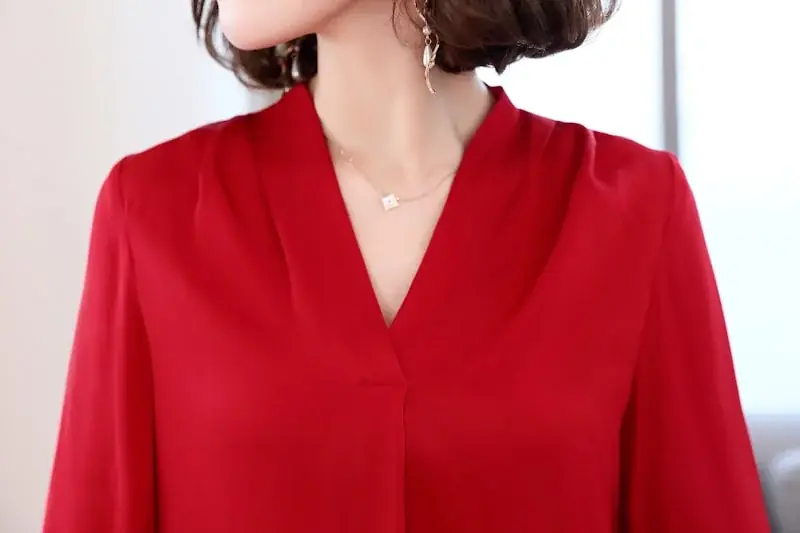
V-Neck Top
V-necks and scoop necks soften broad shoulders by drawing the line down, not across.
Why we picked it: Soft draping fabrics layer better than stiff cotton; raglan or set-in sleeves both work.
Shop on AmazonYour shoulders sit wider than your hips, which stylists call an inverted triangle or V-shape figure. Swimmers, tennis players, and anyone with a naturally strong upper body tend to have this build. Your shoulders and bust carry more width while your hips stay narrower and your legs run lean. Styling this shape comes down to one idea: shift visual weight to your lower half so your proportions read as balanced from top to bottom.
Not sure if you're an inverted triangle? Take our quizAn inverted triangle body shape means your shoulders and bust measure wider than your hips, typically by 2 or more inches. This V-shaped silhouette is common in athletic builds. The SizeUSA anthropometric study of 6,318 women found roughly 5% of the female population falls into this category. The shape is defined by broader upper body proportions and comparatively narrower hips with lean legs.
Understanding your measurements helps confirm if you have an inverted triangle body shape. Here are the typical proportions:
Typical measurement sets: 40-34-36, 38-32-34, or 42-36-38 inches (though any size can be an inverted triangle)
Stand straight and measure: shoulders at their widest point across the back, bust at the fullest part, natural waist at the narrowest point above the belly button, and hips at the widest. If your shoulder or bust measurement exceeds your hips by 5% or more, you likely have an inverted triangle build.
These well-known women share your body type:
Angelina Jolie: Frequently wears V-neck and scoop-neck gowns on the red carpet. She gravitates toward dark solid colors on top with flowing skirts that move with her. Her go-to silhouette is an A-line or column dress, and she rarely wears anything with shoulder detailing.
Naomi Campbell: Uses bold, printed bottoms and structured skirts to balance her athletic build. On the runway and off, she leans into sleek halter necklines and fitted bodices paired with volume below the waist. Her eveningwear often includes mermaid or flared hems.
Charlize Theron: Consistently chooses wrap dresses, raglan sleeves, and draped necklines for public appearances. She avoids stiff or padded shoulders and instead wears soft blazers. When she wears trousers, they are almost always wide-leg or flared.
Add volume below the waist with full skirts, wide-leg pants, and flared hems. These bring visual weight to your lower half and balance your broader shoulders. A simple A-line midi skirt does more for proportional balance than any trick with color or pattern.
Wear darker shades on top and lighter or printed pieces below. A navy top with white wide-leg trousers is the easiest version of this. The contrast shifts attention downward and evens out your silhouette without any effort.
Skip shoulder pads, puffed sleeves, and stiff shoulder seams. Your shoulders already have structure on their own, so let them speak for themselves. Raglan sleeves and dropped shoulders work better because they blur the shoulder line instead of squaring it off.
V-necks, scoop necks, and halter necklines draw the eye inward and down. This softens the horizontal line across your shoulders. If V-necks feel too revealing, a scoop neck with a longer pendant necklace gives you the same narrowing effect.
Choose bottoms with prints, ruffles, pockets, or pleats. Details on your lower half pull attention to the right spot. Cargo-style pockets on trousers, side-tie details on skirts, or a bold floral on wide-leg pants all do the job well.
A-line and fit-and-flare cuts are your workhorse silhouettes. They cinch at the waist and flare out, which naturally creates balance. Once you find an A-line dress that fits your shoulders, you will reach for it constantly.
Avoid horizontal stripes and heavy beading across your chest and shoulders. These pull the eye side to side across your widest point. Save the bold patterns for your skirts and trousers instead.
Hip-length jackets that end just below the hip add width where you want it. A waterfall cardigan or an unstructured blazer that grazes your hip bone keeps your torso looking streamlined while building out the lower silhouette.
Color placement is one of the fastest ways to shift visual proportions. The basic principle: darker, cooler, and more muted shades on your upper body recede visually, while lighter, warmer, or bolder shades on your lower body advance and attract attention. This is not a rule you have to follow in every outfit, but it is the most reliable shortcut when you want to even out a broader upper half.
A navy or black top with white, cream, or pastel pants or skirt. This is the simplest and most effective combination for inverted triangles.
A plain V-neck with a floral or geometric-print skirt. The print draws the eye to the lower half regardless of color.
An all-gray or all-blue outfit where the bottom piece is a shade or two lighter creates subtle balance without obvious contrast.
Belts, statement shoes, or a brightly colored bag at hip level pull attention downward. Skip bold accessories at the neck or shoulders.
Each card opens an Amazon search for a silhouette that balances broader shoulders with volume below the waist — V-neck tops, wide-leg pants, A-line skirts and dresses, waterfall jackets. FFIT-grounded picks for inverted triangle proportions.
Affiliate disclosure: As an Amazon Associate, DiscoverFashions earns from qualifying purchases. We only feature products we genuinely believe will help our readers.
V-necks and scoop necks soften broad shoulders by drawing the line down, not across.
Why we picked it: Soft draping fabrics layer better than stiff cotton; raglan or set-in sleeves both work.
Shop on Amazon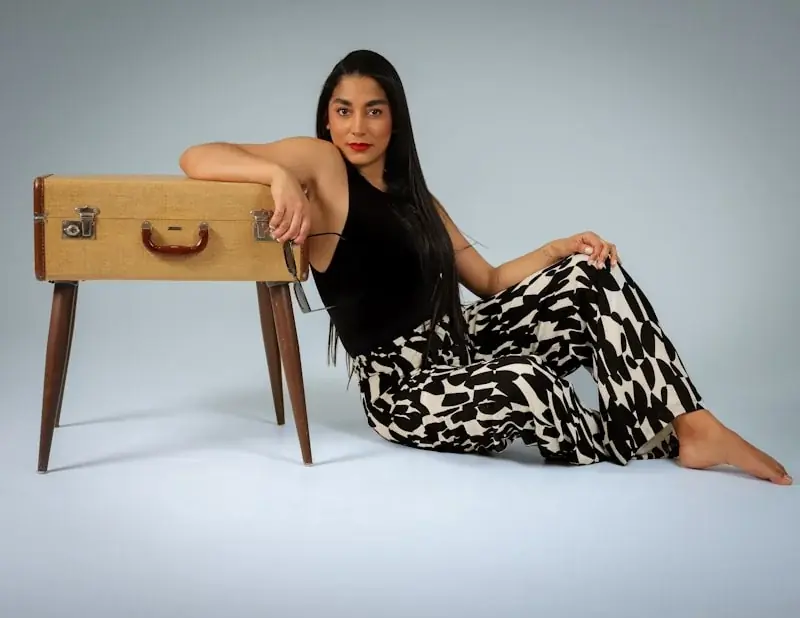
Wide-leg cuts add volume to the lower body, balancing broader shoulders.
Why we picked it: High-waisted styles work best; palazzo or culotte cuts add even more visual width below the waist.
Shop on Amazon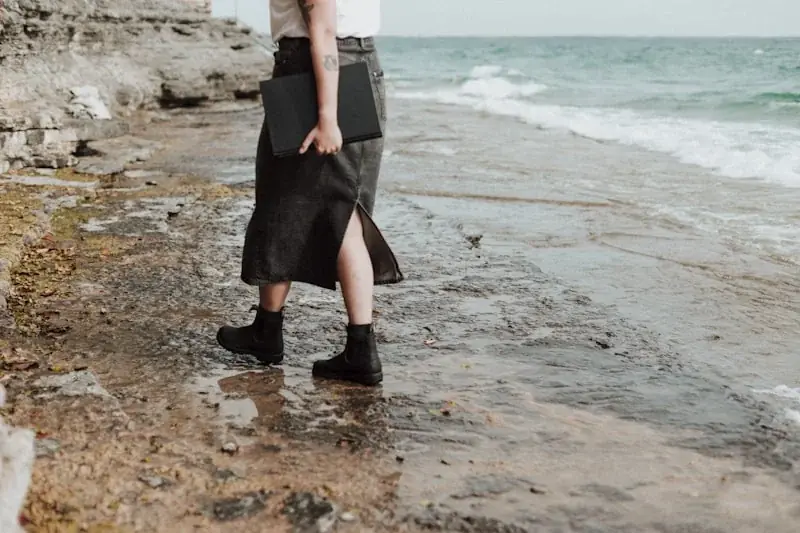
The A-line silhouette adds volume at the hip, helping balance the upper body.
Why we picked it: Look for a clean flare from the waist; pleated or tiered cuts amplify the volume even more.
Shop on Amazon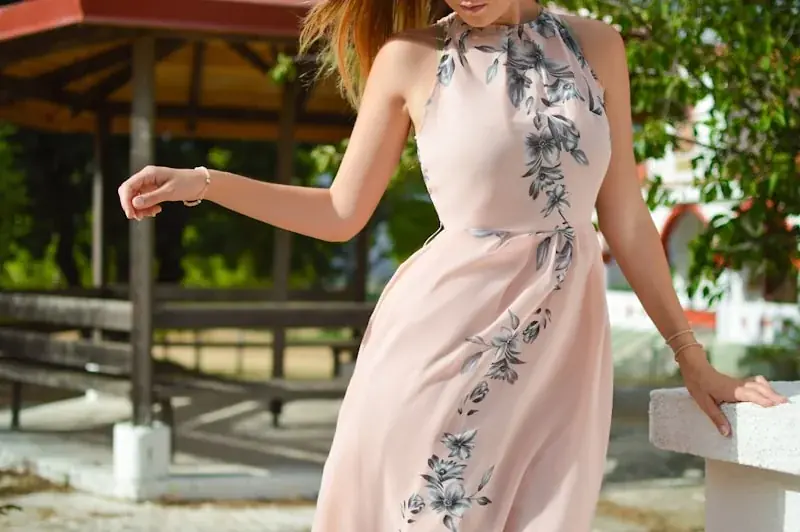
A-line dresses apply the same shoulder-to-hip balance principle in dress form.
Why we picked it: Soft V-neckline or scoop neck adds to the balance; sleeveless or cap sleeves keep the upper body soft.
Shop on Amazon
Soft draped front and sloped shoulders soften the upper body without adding shoulder structure.
Why we picked it: Look for raglan or kimono sleeves; collarless cuts work better than padded notch collars.
Shop on AmazonDresses are one of the easiest categories to get right for inverted triangles because the silhouette does the balancing work for you. The key is choosing styles that keep the top half simple and let the skirt portion add volume or movement.
Fitted through the bodice and gradually widens from the waist to the hem, like the letter A. Works from casual to formal depending on fabric.
Hugs the waist and flares out into a full skirt. The flared skirt balances broader shoulders and creates a defined waistline.
Wraps across the body and ties at the waist. The V-neckline softens shoulders while the wrapped fabric creates waist definition and a gentle flare at the hip.
The seam sits just below the bust, with fabric flowing loosely from there. This draws attention to the narrowest part of your torso and skims over the hips.
The waist seam falls below the natural waist, around the hip. Adds visual weight and detail to the lower half of your body.
Fitted through the torso and flares dramatically from the knee or mid-thigh. This adds volume at the bottom of your silhouette for maximum balance.
Jeans are where most inverted triangles get tripped up. Skinny jeans on their own can make your shoulders look even wider by contrast. The solution is to choose cuts that add width or volume at the hip and thigh, or to layer with a longer top when wearing slimmer fits.
Full width from hip to hem. Adds the most visual volume to your lower half.
Choose a high or mid rise for waist definition
Fitted through the thigh and flares from the knee. Classic 1970s shape that naturally balances broad shoulders.
Look for a slight stretch fabric for comfort through the hip
A subtle flare from the knee that is less dramatic than full flares. The extra width at the hem keeps things proportional.
Works well with both heels and flat boots
Loose through the hip and thigh, straight to the ankle. The relaxed fit adds volume below the waist without being oversized.
Cuff them slightly to show ankle for a more intentional look
The same proportional balance principles apply at every size. If you are a plus-size inverted triangle, your broader shoulders and bust still benefit from V-necklines, darker tops, and volume below the waist. The difference is finding brands and cuts that offer these styles in extended sizing. Look for stretchy, draping fabrics on top and structured bottoms with a comfortable high waist.
A V-neck blouse tucked into an A-line midi skirt is the office outfit that never lets you down. Add a soft blazer without shoulder pads, and you are set for meetings and desk days alike. Wrap dresses in solid dark colors also work because they define your waist while keeping the focus off your shoulder line. For trouser days, pair wide-leg pants with a simple scoop-neck top.
Raglan-sleeve tees with flared or bootcut jeans are the weekend uniform for this shape. The diagonal seam on raglan sleeves softens the shoulder line, and the flare at the hem fills out the lower half. For cooler days, a V-neck sweater over palazzo pants does the same job. In summer, try a halter top with a printed A-line skirt and keep the top plain.
Fit-and-flare gowns with full skirts were practically designed for inverted triangles. Halter-neck dresses show off your shoulders while the skirt adds volume below. For cocktail events, a V-neck dress with a flared hem hits the balance between elegant and proportional. Keep jewelry minimal on the neckline and let the dress do the work.
Wrap dresses are the easy answer here: they cinch at the waist and flare gently at the hip, doing all the proportional work for you. A V-neck top with wide-leg pants in a lighter shade is another strong option. Soft draping fabrics like jersey or silk blends skim over the shoulders without clinging, which looks effortless without trying too hard.
An inverted triangle (or V-shape) body shape means your shoulders and bust are broader than your hips, usually by 2 or more inches. It shows up often in athletic and swimmer builds. The SizeUSA study, which measured 6,318 women across the United States, found that about 5% of the female population has this shape.
Your shoulder or bust measurement needs to exceed your hip measurement by at least 5%. Common measurement sets include 40-34-36, 38-32-34, and 42-36-38 inches. The most reliable check is to compare your shoulder width measured across the back against your widest hip measurement.
V-neck tops, A-line dresses, wide-leg pants, full skirts, and wrap dresses all move visual weight to the lower half. Soft draping fabrics on top combined with printed or lighter bottoms reinforce that balance. The goal is to let your lower body catch up visually with your shoulders.
Shoulder pads, puffed sleeves, boat necklines, double-breasted jackets, and cap sleeves all make the shoulder area look wider. Horizontal stripes and heavy embellishments across the chest do the same thing. If you wear strapless tops, pair them with a voluminous skirt or wide-leg pants to keep things balanced.
Wear darker colors on your upper half and lighter or printed pieces below. V-necks and scoop necks draw the eye inward. Flared jeans, A-line skirts, and palazzo pants add volume to your lower body. Hip-length jackets and belted coats also bring visual weight down to the lower half of your frame.
Inverted triangles have shoulders clearly wider than their hips, which creates a V silhouette. Rectangles have shoulders and hips at roughly the same width with less waist definition, giving a straight line. Inverted triangles style for upper-to-lower balance, while rectangles usually focus on creating waist definition.
High-waisted bikini bottoms with ruffles or prints add volume to your lower half. Halter-neck or V-neck one-pieces soften the shoulder line. Avoid bandeau tops and straight-across strapless swimsuits, which emphasize shoulder width. Lighter colors or bold patterns on the bottoms create the most balanced look poolside.
Bone structure does not change through exercise. But building glute, hip, and thigh muscle with squats, hip thrusts, and lunges can add visible volume to your lower half, which shifts your proportional balance. Genetics set your skeletal frame, but targeted muscle development changes how your proportions look in clothing.
The inverted triangle (V-shape) classification comes from the five-category body shape system used by fashion stylists and researchers. It is defined by broader shoulders and bust relative to narrower hips. The FFIT (Female Figure Identification Technique) system developed at North Carolina State University is one of the most widely cited academic frameworks for this classification.
The SizeUSA anthropometric study of 6,318 women found that approximately 5% of the female population has an inverted triangle body shape. This makes it one of the less common body types, though it is frequently seen among athletes and swimmers.
Body shape categories are general guidelines, not strict rules. Many people have characteristics of more than one shape. These styling suggestions are based on proportional balance principles, and your own comfort and preferences should always come first.
Reviewed by DiscoverFashions Editorial Team | Sources: Wikipedia - Female body shape, Our Methodology
Everything you need to know about dressing and styling the inverted triangle body shape.
Curated outfit combinations that celebrate your broad shoulders and athletic frame.
Build a complete capsule wardrobe designed for your V-shape figure with essential pieces and outfit formulas.
Use our free body shape calculator to discover your exact body type and get personalized style recommendations. It takes about 30 seconds.
Calculate My Body Shape